About this course
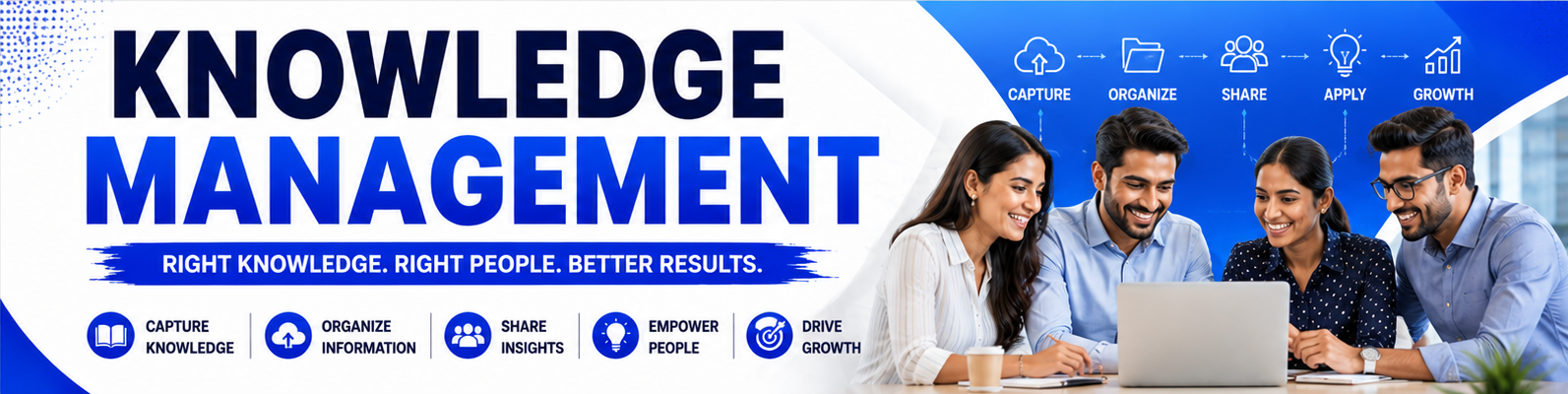
This course introduces students to the fundamental concepts and practices of Knowledge Management, essential for capturing, organizing, sharing, and utilizing organizational knowledge effectively. It covers knowledge creation, information management, collaboration strategies, knowledge-sharing systems, organizational learning, documentation practices, and technology tools used to support knowledge management processes.
Through practical activities, case studies, and real-world business scenarios, learners will analyze how organizations manage intellectual assets to improve decision-making, innovation, and operational efficiency. The course also explores knowledge repositories, best practices, communication frameworks, data organization, and continuous learning strategies, preparing students to support knowledge-driven cultures in professional environments.
Learning Objectives
By the end of this course, students will be able to:
- Explain the fundamental principles and importance of knowledge management in organizations.
- Differentiate between tacit and explicit knowledge and their management approaches.
- Evaluate techniques for capturing, organizing, and sharing organizational knowledge.
- Analyze strategies for improving collaboration and organizational learning.
- Identify tools and technologies used for knowledge storage and information management.
- Develop practical approaches for building effective knowledge-sharing systems.
Target Audience
- Managers and team leaders.
- HR and training professionals.
- Business analysts and project managers.
- Corporate professionals involved in process improvement.
- Anyone interested in organizational learning and information management.
Course Format
- Lectures & Discussions: Core concepts of knowledge management and organizational learning.
- Practical Sessions: Documentation, collaboration, and knowledge-sharing exercises.
- Case Studies: Analysis of successful knowledge management systems and practices.
- Assessments: Quizzes, group activities, and a final knowledge management project.
Expected Outcomes
Upon completion of this course, students will be able to:
- Demonstrate a working knowledge of knowledge management principles and practices.
- Apply strategies for capturing and sharing organizational knowledge effectively.
- Develop systems and processes that improve collaboration and information access.
- Enhance organizational learning and decision-making through knowledge management techniques.
- Bridge the gap between information, collaboration, and organizational performance.